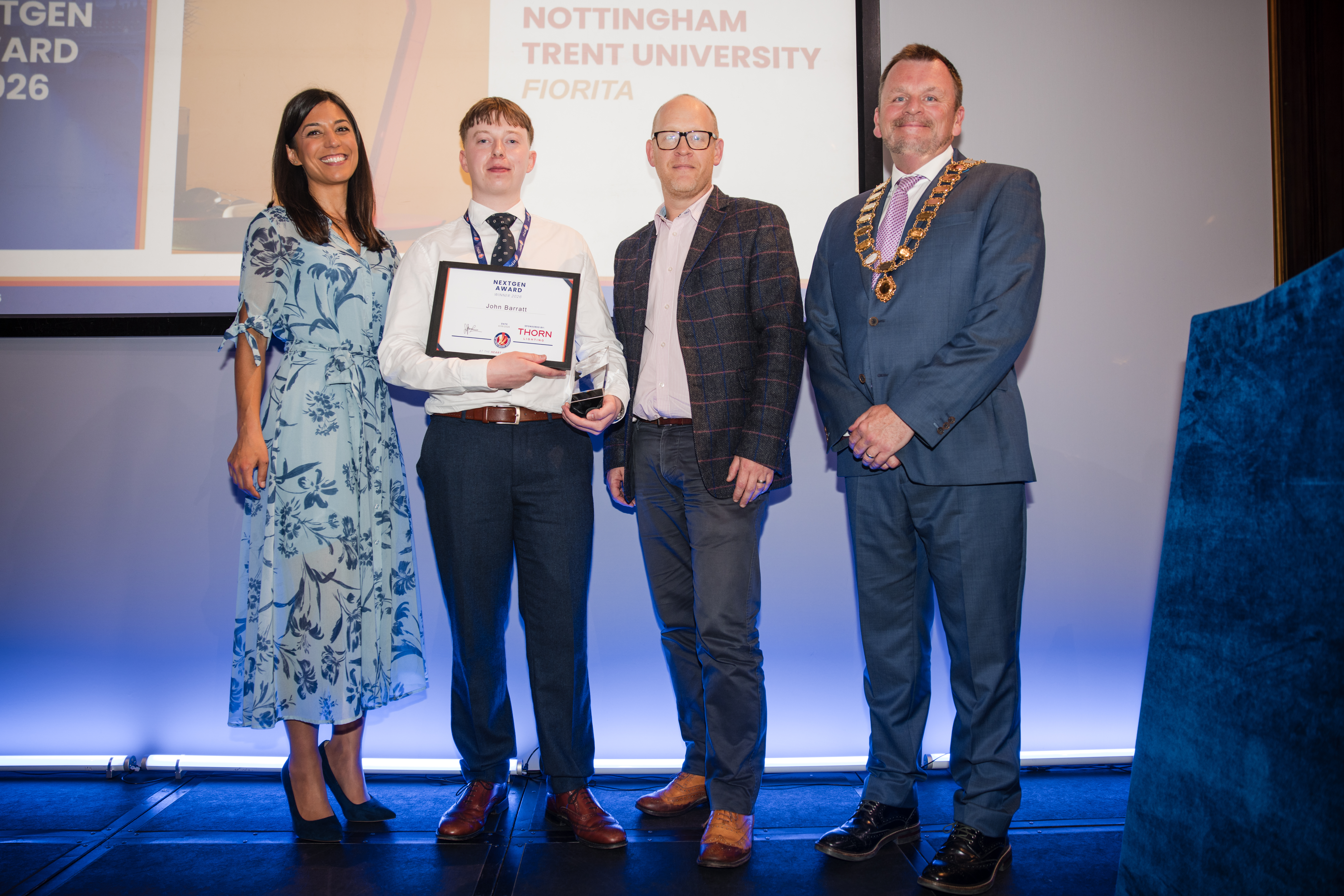
The LIA NextGen 2026 Winner Bright Ideas: Meet John Barrett

Can you tell us a bit about Fiorita. What sparked the idea, and what need or challenge were you hoping to address?
I started my final year with this project knowing I wanted to create something that showed a range of design skills, but also had more of a purpose than just ‘looking nice’.
The idea came from a personal experience. In my first week at NTU, I bought the cactus featured in the Fiorita photos. It’s lived with me in different student houses over the past four years, all with very different lighting conditions, which really affected how it grew.
When I looked for a lamp that could support a plant properly while still fitting into a home, I couldn’t find anything that balanced both. Most grow lights didn’t feel suited to a living space.
Fiorita came from that gap, a lamp designed to support both plant and user wellbeing, in a form that people would actually want in their home.
A typical day using it might start with turning it on in the morning to boost the amount of daylight in the room. It stays on throughout the day, giving the plant the light it needs to thrive. In the evening, it can switch modes so the user can adjust the colour temperature, with cooler light for tasks and warmer light to create a more relaxed environment.
Which part of the design process did you find most rewarding, and was there a moment you felt especially proud of how you tackled the challenge?
The part of the design process that stood out to me most was the electronics and software development. Designing a system that could deliver the functions I’d set out at the start of the project through to a functional prototype was a process of trial and error. I’m probably most proud of the resilience it took to chase all the errors I’d made with a multi-meter and soldering iron. The moment everything came together, assembling the electronics into the lamp body and turning it on for the first time, made all of that effort worth it.
Did sustainability or ethical design play a role in how you approached Fiorita, especially given the focus on wildlife impact?
It did. As designers, I think we have a responsibility to consider the impact our decisions have on the environment, as well as any wider ethical implications. Good design already involves thinking about a range of stakeholders, so for this project I made a conscious effort to include the environment as one of them when setting my design requirements.
During the development of Fiorita, material choice, component selection, and designing for maintenance and disassembly were the key areas that influenced its overall impact.
The components were selected from reputable suppliers and comply with relevant standards, helping ensure both quality and longevity. The lamp body is made from an aluminium alloy and is designed to be taken apart using a small number of common tools. This means faulty parts can be replaced easily, and the product can be fully disassembled for recycling at the end of its life.
What was it like presenting your concept live at The LIA Annual Lunch, knowing the audience would be voting on the winner?
I really enjoyed it, going into the day I did have some nerves but as soon as I was in a saw my poster in the corner I was excited to show off my design. I put the voting part aside in my head and just enjoyed the conversations I was having. After the amount of work that went in during the final year of university it was great get some feedback and recognition from industry.
Did any feedback from the attendees surprise or inspire you?
A lot of the feedback I received went beyond just the physical product shown on the poster. Many of the conversations were more in-depth, particularly around full spectrum lighting and the use of horticultural light sources in domestic or commercial environments, which I hadn’t fully expected.
Those discussions were really valuable, as they helped broaden how I think about the application of the project.
The level of interest and validation I got on the day gave me the confidence to take Fiorita further, and I’d like to continue developing it with the aim of bringing it to market.
You’re now in your final year, do you see yourself moving into lighting or product design professionally after university?
Definitely. Speaking to so many people at the event, especially those working across different areas of the industry, really opened my eyes to the range of paths available. Before that, I hadn’t fully realised how varied the lighting industry is, or how many different directions you can take within it. That’s definitely made me more interested in pursuing a career lighting after graduating.
What excites you most about the lighting or design sector, and where to you think a graduate like you could make the biggest impact?
What excites me about the lighting and design sector is how fast-paced it is and how quickly ideas can become real products. I’m really interested in the growing focus on sustainability, and I think graduates can bring fresh ideas and create designs that are more thoughtful, responsible, and genuinely useful in everyday life.
Are you open to exploring opportunities in lighting after graduation, and what type of roles, projects, or companies would excite you most?
Absolutely, I’d be open to opportunities in lighting after graduation. I’m particularly interested in product or industrial design roles where there’s a clear focus on the user, the environment, and the purpose behind the design.
I’m drawn to companies that are trying to create products that aren’t just functional, but genuinely thoughtful, balancing user needs with environmental responsibility and aiming to make something that has real value.
Finally, what advice would you give to next year’s students thinking about entering the NextGen Award? Any tips or encouragement?
I’d say just go for it. It’s a really good opportunity, and you get a lot out of the process.
One of the main things I learned is not to get too attached to your first idea. It’s better to start with a strong core statement of what you want your project to do, and then stay open to feedback, new ideas, and different ways of solving the problem.
I’d also really recommend thinking about the full user journey, not just the final product. That helped me develop something with more purpose and a clearer direction.